Curves and slopes: free printable line tracing worksheet
रेखाएँ ट्रेस करें · छोटी को रेखाएँ ट्रेस करने में मदद करें
- Age
- 3–5
- Pages
- 1
- Paper
- A4
- Language
- हिं + En
No sign-up, no email. Print on plain A4 paper.
About this sheet
What is on the page, and how to get the most out of it.
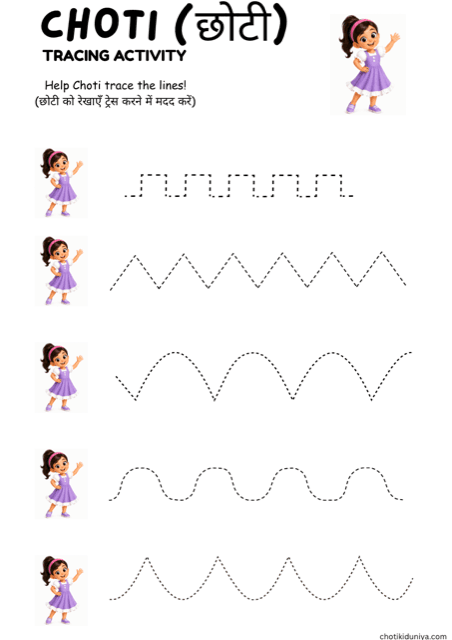
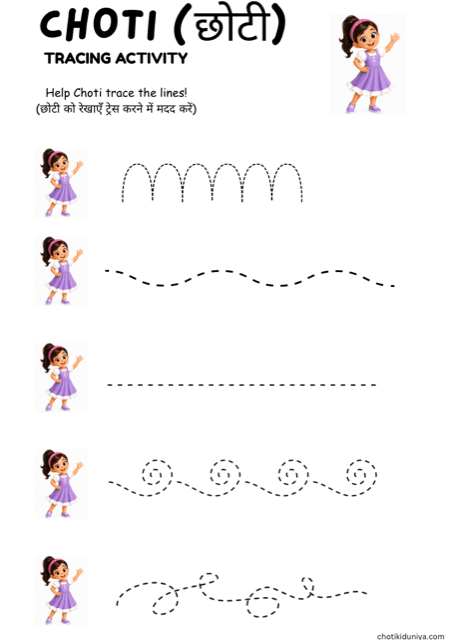
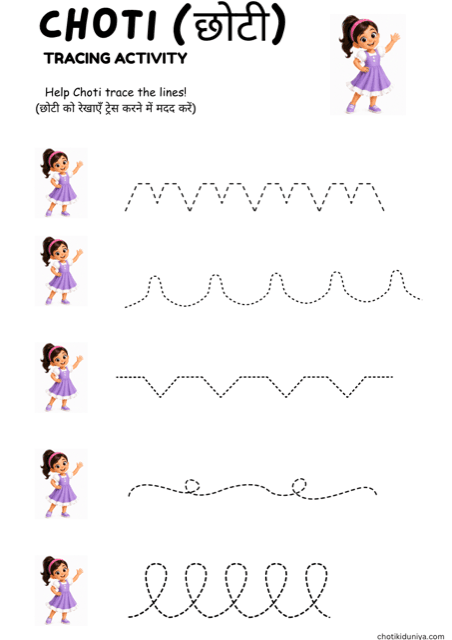
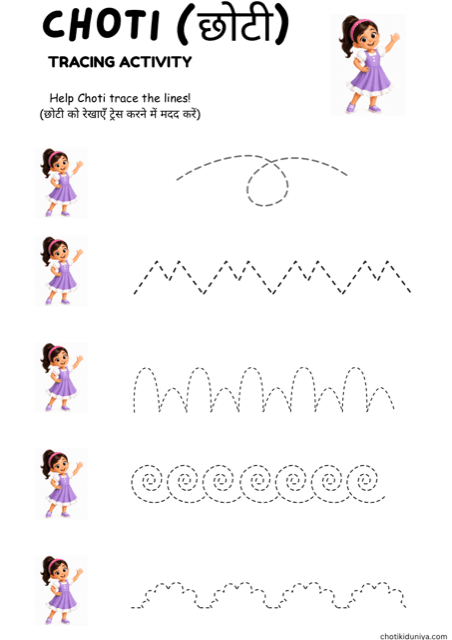
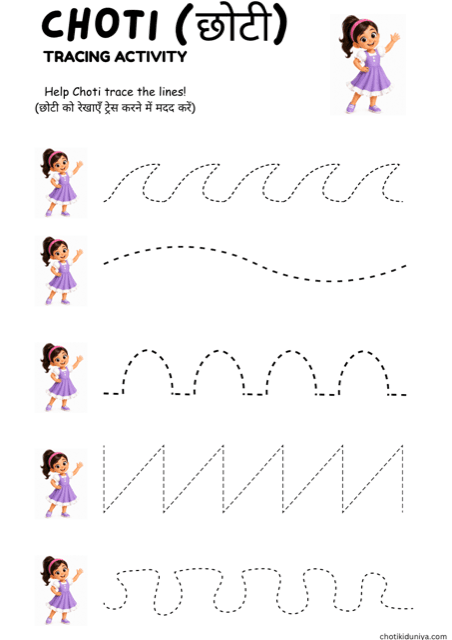
Five rows: rolling scallops, one long shallow wave, rounded arches, a steep sawtooth, and a row of squared hooks.
The long shallow wave in the second row is the one worth noticing. It runs almost the width of the page as a single continuous line with only the gentlest rise and fall, which makes it harder than the busier rows above and below it.
Short repeated shapes let a child reset every few centimetres. A long line does not. The hand has to keep moving steadily across the whole page, and children who can manage sharp zigzags will often wobble badly here. That is a stamina and steadiness problem rather than a control one, and it is worth knowing which of the two your child is short on.
The sawtooth row at the bottom is the opposite: steep, tightly spaced, and demanding quick direction changes in a small space.
What your child practises
A mix of long steady lines and tight repeated ones, which test different things.
- Holding a line steady across a whole page
- Making quick direction changes in a small space
- Tracing rounded arches evenly
- Building hand stamina
Common questions
My child does zigzags well but wobbles on the long wave.
Those test different things. Short repeated shapes let the hand reset often, while a long line needs steady continuous movement. It is a stamina issue rather than a control one.
Does the order of these sheets matter?
Loosely. The set gets harder from the zigzag sheet through to the arrows sheet, but there is no harm in picking whichever row looks right for the day.