Loops and spirals: free printable line tracing worksheet
रेखाएँ ट्रेस करें · छोटी को रेखाएँ ट्रेस करने में मदद करें
- Age
- 3–5
- Pages
- 1
- Paper
- A4
- Language
- हिं + En
No sign-up, no email. Print on plain A4 paper.
About this sheet
What is on the page, and how to get the most out of it.
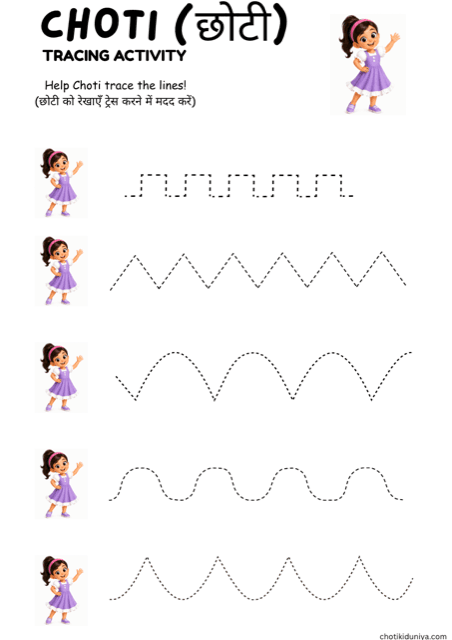
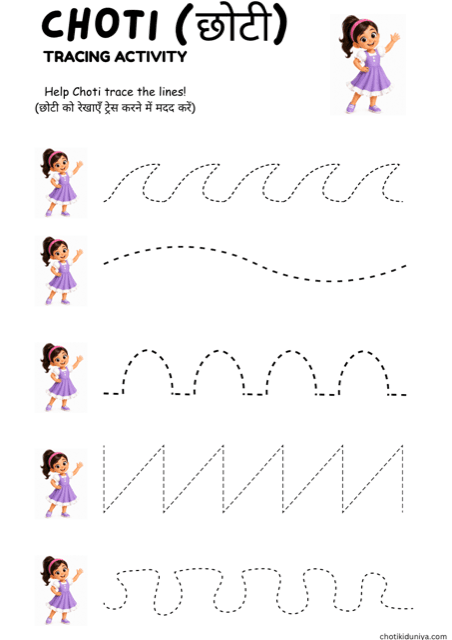
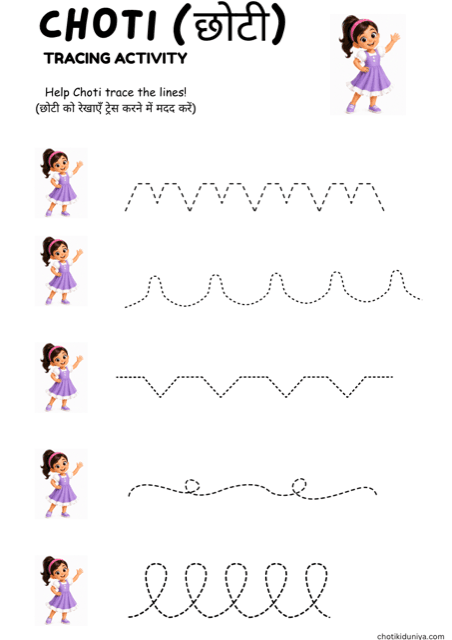
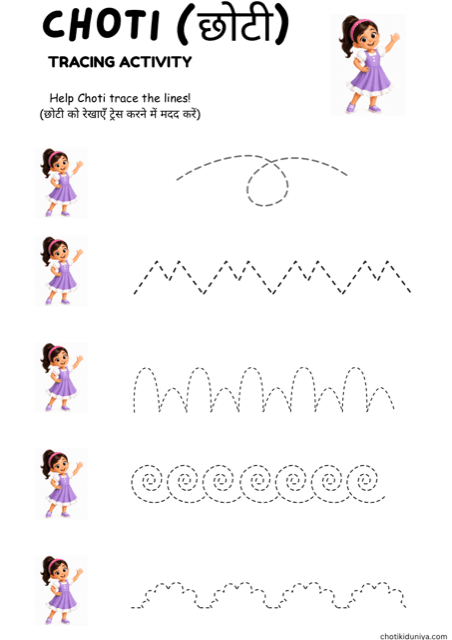
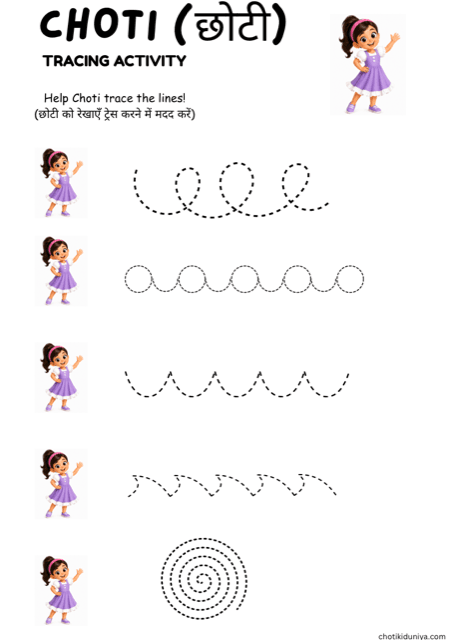
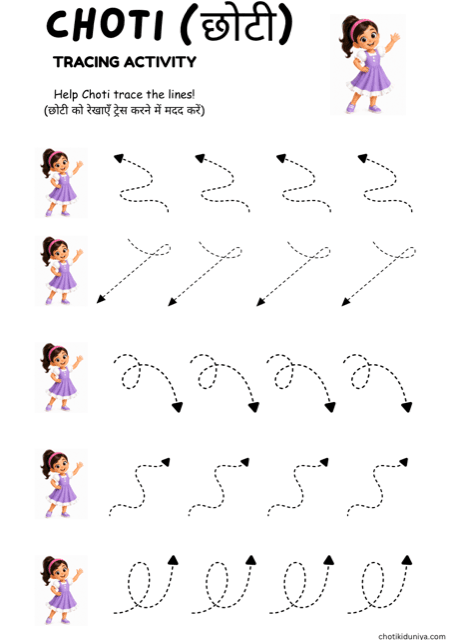
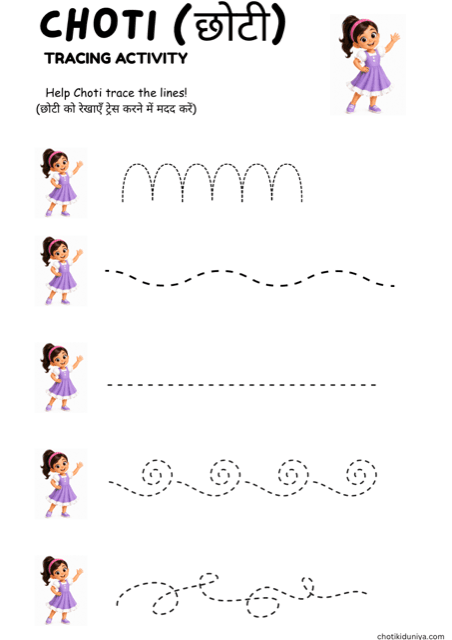
Five rows built around curls: tight repeated coils, a gentle wave, rounded arches, a line broken by small loops, and a row of tall standing loops.
Loops are the movement that separates pre-writing from writing. A loop asks the pencil to cross back over its own path, which no straight line or simple wave ever does. It is the same demand the numbers 6, 8 and 9 make, and later the same demand cursive makes everywhere.
Expect this sheet to be slower than the first two. Children who trace confident zigzags often produce loops that do not close, or that get progressively larger across the row as the hand loses the size it started with.
Keeping loops the same size across a row is genuinely difficult and not worth insisting on. That they are loops at all is the achievement at this age.
What your child practises
Curling strokes that cross back over themselves, which is where writing movements really begin.
- Crossing a stroke back over its own path
- Closing a loop rather than leaving it open
- Keeping repeated shapes a similar size
- Preparing for the 6, 8 and 9 numerals
Common questions
My child’s loops get bigger across the row.
Very common. Holding a size steady across a whole row is difficult, and it is not worth insisting on. That they are loops at all is the achievement.
Why do loops matter for writing?
A loop crosses back over its own path, which no straight line does. It is the same movement the numbers 6, 8 and 9 need, and the movement cursive is built from.